Posted on — Leave a comment

Could Hidden Mold Be Affecting Your Health? What Symptoms Can—and Cannot—Tell You

Hidden mold exposure can be difficult to recognize because mold can grow out of sight, and common symptoms cannot tell you by themselves whether mold is the cause. A careful next step considers the building, moisture, health history, and appropriate testing without jumping to conclusions.

The short answer

Damp or moldy environments are associated with respiratory irritation, allergy symptoms and worsening asthma in some people. Other concerns—including headaches, fatigue, concentration difficulties and unrefreshing sleep—are nonspecific and can have many possible causes. Symptoms do not confirm mold exposure, show that mycotoxins are present or identify a building as the source.

Why mold is receiving increased attention

On September 18, 2026, the U.S. Department of Health and Human Services, led by Secretary Robert F. Kennedy Jr., convened a Mold Surveillance Roundtable involving federal leaders, clinicians, researchers and patient advocates. The discussion reflects increased national attention to mold, fungal disease, surveillance and gaps in evidence.

The roundtable does not mean that HHS, CDC, EPA or any other federal agency endorses Green Wisdom Health, RealTime Laboratories, urine mycotoxin testing or this panel. It does show that mold and fungal-health questions are receiving more organized public-health attention.

Our mini-split discovery

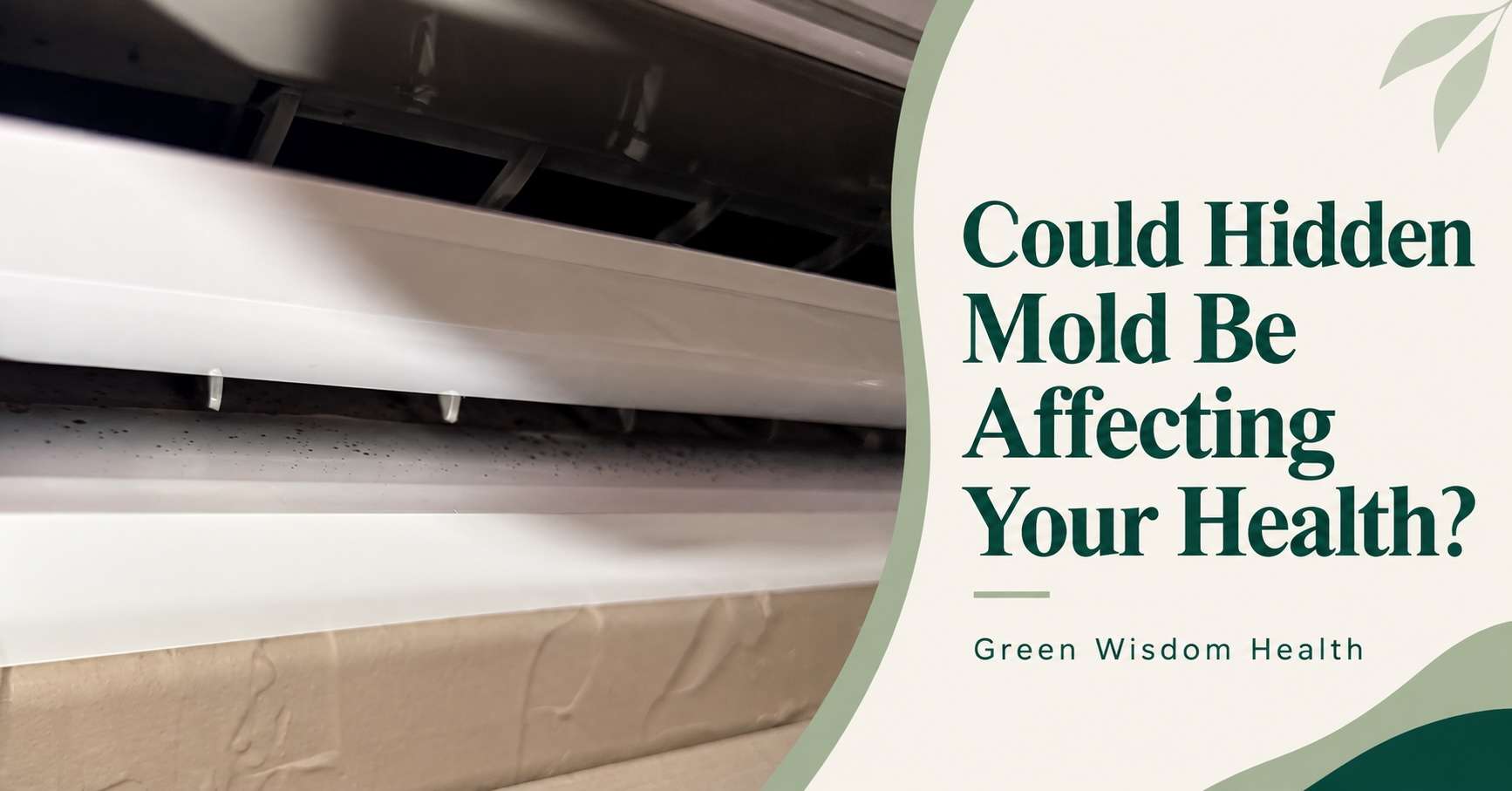
After Janet and Dr. Stephen Lewis experienced persistent respiratory symptoms, we discovered visible mold hidden inside the mini-split air conditioner in our bedroom. We cannot establish that the mold caused those symptoms. The discovery did, however, show us how easily a potential exposure can go unnoticed in a place used every day.

That experience reinforced a practical lesson: investigate moisture and visible growth, take symptoms seriously and resist the temptation to assume that one finding explains everything.

Where mold may hide in homes and buildings

Mold needs moisture. According to the U.S. Environmental Protection Agency and CDC, growth may develop where water, condensation or persistent humidity reaches a suitable surface.

  • Inside air conditioners, air handlers, drain pans or ductwork
  • Behind drywall, wallpaper, baseboards or cabinets
  • Under carpet, flooring or sinks
  • Around roof, window or plumbing leaks
  • In bathrooms, laundry rooms, basements and crawl spaces
  • On insulation, ceiling tiles, wood, fabric or upholstery after water damage

A musty odor, staining, repeated condensation or a history of leaks can justify a closer environmental inspection. Hidden growth should be approached carefully, especially when a large area or contaminated HVAC system may be involved.

Possible symptoms associated with damp or moldy environments

CDC and EPA describe respiratory, allergic, eye and skin effects that may occur in some people who spend time in damp or moldy environments. Possible concerns can include:

  • Nasal or sinus congestion
  • Coughing, wheezing or throat irritation
  • Watery, itchy or irritated eyes
  • Skin irritation
  • Worsening allergy or asthma symptoms
  • Headaches or fatigue
  • Difficulty concentrating or “brain fog”
  • Difficulty sleeping or waking unrefreshed

These symptoms are nonspecific. They may result from infections, seasonal allergies, asthma, medication effects, sleep disorders, stress, anemia, thyroid concerns or many other conditions. They do not confirm mold exposure and do not mean that mycotoxins are present.

Why symptoms alone cannot confirm mold exposure

No symptom list can establish the source of a health concern. Two people in the same building may respond differently, and the same symptom can have unrelated causes. Timing, medical history, allergy or asthma status, medications, occupational exposures and the condition of the building all matter.

Seek appropriate medical care for severe shortness of breath, chest pain, fever, confusion, rapidly worsening symptoms or another urgent concern. People with chronic lung disease or weakened immune systems should discuss possible mold exposure with a licensed healthcare professional.

Correct the moisture problem first

EPA summarizes mold control in one sentence: moisture control is the key. If mold is visible or a musty odor is present, locate and correct the water source. Repair leaks, address condensation, dry water-damaged materials promptly and remove contaminated materials safely. Testing a person does not locate or remediate mold in a building.

Small areas may sometimes be handled using EPA guidance. Larger areas, sewage contamination, repeated water intrusion or suspected contamination in an HVAC system may require a qualified environmental or remediation professional. Environmental work and healthcare evaluation answer different questions and may both be appropriate.

What the RealTime Laboratories Total Mycotoxin Panel measures
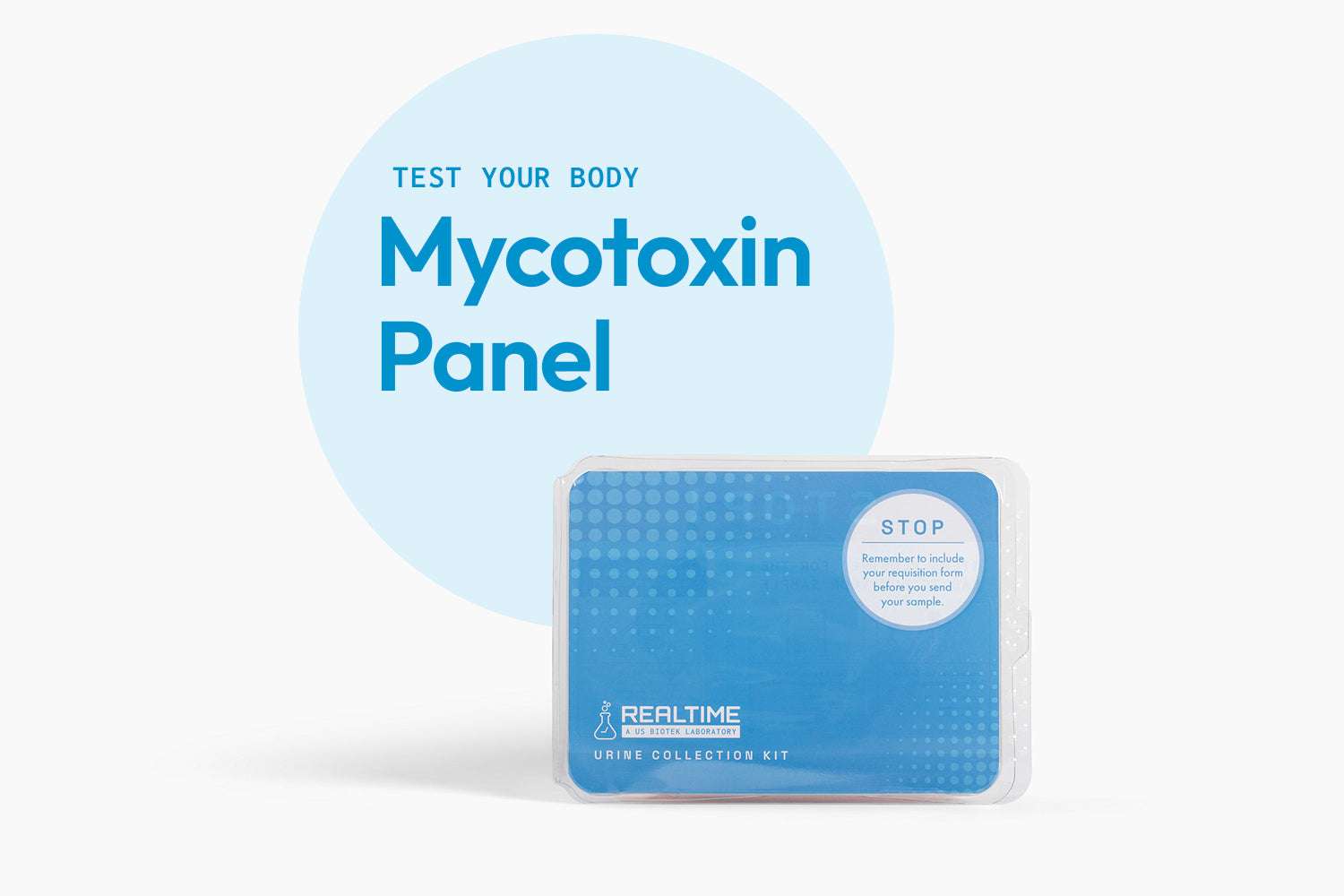
RealTime Laboratories Total Mycotoxin Panel urine collection kit

The RealTime Laboratories Total Mycotoxin Panel is a urine test that measures selected mycotoxins detected in the submitted sample at the time of collection. The current panel reports:

  • Ochratoxin A
  • Aflatoxin group
  • Macrocyclic trichothecene group
  • Gliotoxin derivative
  • Zearalenone

The laboratory report should be interpreted alongside the person’s health history, symptoms, environmental information and other relevant findings.

What the panel cannot determine

  • It does not diagnose mold illness.
  • It does not prove that symptoms were caused by mold.
  • It does not identify the building or location where an exposure occurred.
  • It does not establish that a home, workplace or HVAC system is contaminated.
  • It does not guarantee that treatment is needed or will produce a particular result.

A urine result is one piece of information. It should not be used by itself to assign a diagnosis, prescribe a “detox” program or replace an appropriate environmental assessment.

What the $399 Green Wisdom Health purchase includes

  • The urine collection kit
  • Laboratory processing
  • The laboratory report
  • A personalized results consultation with Stephen E. Lewis, D.C.

Stephen E. Lewis, D.C. — Clinical Director and Lead Clinician

During the included consultation, Dr. Lewis reviews the laboratory report in the context of your health history and goals. Ordering is unavailable for residents of New York, New Jersey and Rhode Island.

$25 Promotional Credit

The panel is $399. Use coupon code WELLNESS25 at checkout to receive a $25 promotional credit, reducing your price to $374.

Who may want to discuss testing

A conversation about testing may be reasonable for someone who has discovered dampness or mold in a home or workplace, has ongoing respiratory or allergy concerns that deserve evaluation, or wants to understand whether this laboratory information could add context to an existing health review.

Testing is not automatically the right first step for everyone. A discussion should consider symptoms, health history, prior testing, the condition of the building and whether moisture has been corrected. Green Wisdom Health’s brief questionnaire can help organize that information before an office follow-up.

What to do next

  1. Address active leaks, dampness and visible mold safely.
  2. Seek medical evaluation for persistent, severe or concerning symptoms.
  3. Gather relevant environmental information and previous test results.
  4. Review the panel details or complete the questionnaire below if you want help deciding whether testing fits your situation.

Explore the Mycotoxin Panel

Review what the urine panel measures, what is included and the important limitations before ordering.

Learn About the Mycotoxin Panel

Not Sure Whether Testing Is Right for You?

Complete our brief questionnaire to tell Green Wisdom Health about your concerns, possible exposure and previous testing. Our office can then help you determine the appropriate next step.

Complete the Mycotoxin Questionnaire

Have Questions?

Contact Green Wisdom Health if you need help understanding the testing process, availability or included consultation.

Contact Green Wisdom Health

Frequently asked questions

Can symptoms prove mold exposure?

No. Symptoms associated with damp or moldy environments are nonspecific and may have many causes. They do not confirm exposure, show that mycotoxins are present or prove where an exposure occurred.

What does a urine mycotoxin panel measure?

It measures selected mycotoxins detected in the submitted urine sample at the time of collection. Results should be interpreted with health history and other relevant findings.

Can this test identify mold in a particular building?

No. The panel cannot identify the home, workplace or other location where an exposure may have occurred. Environmental assessment is needed to evaluate a building.

Is the consultation with Dr. Lewis included?

Yes. The $399 purchase includes a personalized results consultation with Stephen E. Lewis, D.C., as well as the kit, laboratory processing and report.

In which states is ordering unavailable?

Ordering is unavailable for residents of New York, New Jersey and Rhode Island.

Educational information only: This article does not diagnose mold illness or provide individualized medical treatment. Persistent, severe, worsening or concerning symptoms should be evaluated by an appropriate licensed healthcare professional.

Editorial sources

Posted on — Leave a comment

Why Am I So Tired All The Time?

By Dr. Stephen Lewis, D.C.

Persistent fatigue is a symptom, not a diagnosis. It may be related to sleep, stress, medicines, nutrition, thyroid function, blood sugar, anemia, infection, mental health, or another medical condition. Because the possibilities overlap, the most useful next step is usually a careful history and appropriate evaluation—not guessing from one symptom or taking random supplements.

Feeling tired after a demanding week or a short night of sleep is common. Fatigue that lasts for weeks, repeatedly interferes with daily life, or does not improve with rest deserves attention. The National Library of Medicine notes that fatigue has many possible causes and should be evaluated when adequate sleep, nutrition, and a lower-stress environment do not help.

Common Factors That Can Contribute to Fatigue

Sleep Quantity and Sleep Quality

Too little sleep is an obvious cause of tiredness, but spending enough hours in bed does not always mean sleep is restorative. Insomnia, frequent waking, pain, shift work, and sleep disorders can affect daytime energy. Loud snoring, gasping during sleep, morning headaches, or significant daytime sleepiness are reasons to discuss sleep apnea with a healthcare professional; the National Heart, Lung, and Blood Institute lists these among common sleep-apnea symptoms.

Thyroid Function

Both underactive and overactive thyroid conditions can be associated with fatigue. Symptoms such as feeling cold, dry skin, constipation, changes in weight, or a fast heartbeat can have many causes, so symptoms alone cannot diagnose a thyroid disorder. The American Thyroid Association describes TSH as the usual initial blood test for thyroid function and explains when additional thyroid measurements may be useful.

If thyroid questions are central to your concerns, review the markers included in the Thyroid Hormones Extensive Lab Panel. A panel should be selected because its tests fit the question being evaluated—not because fatigue automatically means a thyroid problem.

Iron, Vitamin B12, and Other Nutritional Factors

Iron-deficiency anemia and vitamin B12 deficiency can cause tiredness or weakness. The NIH Office of Dietary Supplements provides detailed guidance on iron and vitamin B12, including risk factors and the importance of appropriate assessment. More is not always better: iron in particular should not be started solely because of fatigue, since excessive iron can be harmful.

Blood Sugar and Metabolic Health

Fatigue may occur with diabetes, but it is not specific to diabetes. Increased thirst, frequent urination, blurred vision, slow-healing sores, or recurrent infections are additional reasons to seek medical evaluation. The National Institute of Diabetes and Digestive and Kidney Diseases explains common diabetes symptoms and why testing should be discussed with a primary healthcare professional.

Stress, Mood, Medicines, and Other Health Conditions

Emotional stress, depression, persistent pain, infection, and many other health conditions can affect energy. Prescription and nonprescription medicines—including some antihistamines, sleep medicines, and other medications—may also contribute. Do not stop or change a medicine without speaking with the healthcare professional who manages it.

Why One Symptom Rarely Provides One Answer

Fatigue can result from more than one factor, and many possible causes produce similar symptoms. Laboratory testing can provide useful objective information, but it does not necessarily reveal a single explanation. Results are most useful when interpreted alongside symptoms, health history, medicines, sleep, nutrition, and other relevant information.

Our Laboratory Testing overview explains the Green Wisdom Health process, what is included with eligible LabCorp panels, and how Core and Specialty Lab Panels differ.

When to Seek Prompt Medical Care

Call 911 or seek emergency help when fatigue occurs with chest pain, shortness of breath, a fast or irregular heartbeat, feeling as though you may pass out, severe abdominal, pelvic, or back pain, unusual bleeding, or a severe headache. Seek immediate help for thoughts of self-harm or suicide; in the United States, call or text 988. These warning signs follow current Mayo Clinic fatigue guidance.

Arrange a medical appointment for unexplained fatigue that persists, worsens, disrupts daily activities, or is accompanied by fever, unintentional weight loss, night sweats, weakness, or other concerning symptoms.

A Practical First Step

If you are medically stable but still unsure which Green Wisdom Health resource fits your concerns, complete the secure Health Survey. It gives our team context for the conversation; it is not a diagnosis and does not replace urgent or primary medical care.

Related Resources

References

  1. National Library of Medicine. Fatigue. MedlinePlus Medical Encyclopedia. Reviewed May 19, 2025.
  2. Mayo Clinic Staff. Fatigue: When to see a doctor. Updated February 20, 2026.
  3. American Thyroid Association. Thyroid Function Tests.
  4. National Heart, Lung, and Blood Institute. Sleep Apnea Symptoms. Updated January 9, 2025.
  5. NIH Office of Dietary Supplements. Iron Fact Sheet for Consumers and Vitamin B12 Fact Sheet for Consumers.
  6. National Institute of Diabetes and Digestive and Kidney Diseases. Symptoms & Causes of Diabetes.
Posted on — Leave a comment

Why Weight Loss Gets Harder After 40

If you’ve ever thought, “I’m doing the same things I used to, but nothing is working anymore,” you’re not imagining it.

Weight loss after 40 often feels different. What used to work in your 20s or 30s, whether that was cutting calories, adding more cardio, or simply being more active, doesn’t always lead to the same results.

This is one of the most common frustrations we hear, and it makes sense when you understand what’s changing under the surface.

Listen to this podcast where we walk through the good, the bad, and the more complex realities of weight loss in this stage of life.

Posted on — Leave a comment

Common Causes of Hair Loss and What You Need to Know

You might notice more hair than usual in the shower, thinning around your temples, or your ponytail feeling smaller than it used to. Sometimes it seems to happen suddenly, while other times it shows up gradually over time.

A lot of people assume hair loss is purely genetic. And while genetics can definitely play a role, we often see other factors involved as well. Things like hormone changes, thyroid function, iron levels, and nutrition can all influence how healthy your hair follicles are.

What you might not know….. Hair loss is often a signal that the body might need support somewhere else.

Looking at the Root Cause

Hair loss can feel discouraging, but it can also provide helpful clues about what may be happening in the body.

Instead of focusing only on the hair itself, functional medicine looks at the bigger picture. Hormone balance, thyroid health, nutrient levels, stress, and metabolism all influence the environment where hair follicles grow.

When those systems are supported, many people begin to see gradual improvements in hair growth over time.

If you’ve been noticing hair thinning or increased shedding, taking a closer look at what’s happening inside the body can often be an important first step.

Listen to our podcast to learn what you can do to save your hair!

Posted on — Leave a comment

Looking Beyond Normal Lab Results

A laboratory result inside its reference range is useful information, but it is not a guarantee that every possible health problem has been ruled out. Results need to be interpreted with the reason for testing, symptoms, health history, medicines, test preparation, and—when relevant—earlier results. Persistent symptoms deserve appropriate evaluation, but they do not automatically mean that a hidden disease must be present.

One of the most common concerns we hear is, “My blood work was normal, but I still don’t feel like myself.” Fatigue, brain fog, digestive concerns, discomfort, or low energy can be frustrating when an initial test does not provide a clear explanation. Understanding what a reference range does—and does not—mean can make the next conversation more productive.

What Is a Laboratory Reference Range?

A reference range is the interval a laboratory uses to compare an individual result with results observed in a defined reference population. Different laboratories may use different methods, units, and reference ranges. Age, sex, and other factors may also affect which range applies.

The National Library of Medicine’s guide to understanding laboratory results explains two important points: a healthy person can sometimes have a result outside a reference range, and a result inside a reference range does not always rule out a health condition. A result should therefore be read against the range printed on that specific laboratory report rather than a range copied from another source.

Why Symptoms and Results Must Be Considered Together

A laboratory test answers a defined question about the sample collected. It does not capture every possible cause of a symptom, and no single panel is appropriate for every person. The meaning of a result may depend on why the test was ordered, the person’s health history, physical findings, medicines and supplements, and the pattern formed by related results.

This does not mean every persistent symptom requires more laboratory testing. Sometimes the appropriate next step is a clinical examination, review of sleep or medicines, a change in monitoring, a referral, or watchful follow-up. Additional testing is most useful when it addresses a reasonable question raised by the overall picture.

Laboratory Values Can Vary

Some variation between measurements is expected. A person’s biology changes over time, and test results can also be influenced by sample collection and preparation. Time of day, recent food or drink, hydration, strenuous exercise, medicines, vitamins, supplements, and whether preparation instructions were followed can matter for particular tests.

MedlinePlus advises patients to follow the instructions for a specific test and to tell the healthcare professional or laboratory about medicines and supplements and any preparation instructions that were not followed. Its laboratory preparation guide explains why these details can affect accuracy. Laboratory-medicine research also distinguishes biological variation from pre-analytical and analytical variation when evaluating changes between results.

What a “Normal” Result May Mean for the Next Step

  • The initial question may have been answered. A result can make a suspected explanation less likely, even when symptoms continue.
  • The symptom may have another cause. Many symptoms are nonspecific and overlap across sleep, nutrition, medicines, stress, mental health, and medical conditions.
  • A trend may be more informative than one number. When clinically appropriate, results obtained under comparable conditions can help a qualified professional assess change over time.
  • Another kind of evaluation may be needed. Additional testing is only one possibility; examination, medication review, referral, or monitoring may be more appropriate.

Seek prompt medical attention for severe, rapidly worsening, or otherwise concerning symptoms. A wellness or laboratory-review service should not delay urgent or primary medical care.

How Green Wisdom Health Uses Laboratory Information

Green Wisdom Health reviews laboratory findings alongside the information you provide about your concerns and wellness goals. The purpose is to help you understand the results and prepare for informed next steps—not to declare that every in-range value is “optimal,” prove that an illness exists, or promise that testing will uncover one root cause.

Read the Laboratory Testing overview to compare the Health Survey, Core Lab Panels, Specialty Lab Panels, and the review process. If you are unsure where to begin, the secure Health Survey gives the Green Wisdom Health team context for the conversation.

If low energy is your main concern, Why Am I So Tired All The Time? explains several common contributors to fatigue and when symptoms need prompt medical evaluation.

Listen to the Companion Podcast

The companion Green Wisdom Health podcast discusses why a laboratory report should be considered together with the person behind the numbers. The written guidance above provides the key definitions, limitations, and source material for readers who prefer an article format.

References

  1. National Library of Medicine. How to Understand Your Lab Results. MedlinePlus Medical Test.
  2. National Library of Medicine. Laboratory Tests. MedlinePlus.
  3. National Library of Medicine. How to Prepare for a Lab Test. MedlinePlus Medical Test.
  4. Jones GRD. Biological variation: Understanding why it is so important? Practical Laboratory Medicine. 2021;23:e00199. doi:10.1016/j.plabm.2020.e00199.
  5. Emre HÖ, et al. Utilization of biological variation data in the interpretation of laboratory test results. Biochemia Medica. 2021;31(1):010705. doi:10.11613/BM.2021.010705.
Posted on — Leave a comment

Supporting Hormones in a High Stress World

Have you ever felt like stress just hits you harder than it used to?

Maybe your sleep is lighter. Your patience is shorter. PMS feels more intense. Or you feel wired but exhausted at the same time.

Many men and women assume this is just part of modern life.

But there is real biochemistry behind why stress can feel more disruptive in a woman’s body.

In our latest podcast, you’ll find out:


• How cortisol and progesterone share hormonal building blocks
• Why chronic stress can lower progesterone over time
• How this shift impacts mood, sleep, cycles, and resilience
• Why stress tolerance often changes in perimenopause
• What you can do to rebuild your stress buffering capacity

If stress has been affecting your energy, mood, or cycle more than it used to, this podcast will help you understand why and what you can do about it.

Posted on — Leave a comment

Health and Wellness Headlines for November 27

Junk Food in Hospitals 

Story from NutritionFacts.org. Originally posted on November 26, 2024, 7:00 am.

Why is hospital food so unhealthy? “Put in stark terms, CVD [cardiovascular disease] claims 1 American life every 39 seconds and is respon… Read the full story on NutritionFacts.org.


Celebrating Native American Cuisine with Chef Lois Ellen Frank, Ph.D.

Story from NutritionFacts.org. Originally posted on November 21, 2024, 7:00 am.

Meet Chef Lois Ellen Frank, Ph.D. We had the pleasure of talking with Dr. Frank about her work, food, and Native American cuisine. Read on [… Read the full story on NutritionFacts.org.


Cannabis and Cars 

Story from NutritionFacts.org. Originally posted on November 19, 2024, 7:00 am.

Did traffic fatalities increase or decrease after cannabis legalization? Is cannabis-impaired driving a public health and safety concern? We… Read the full story on NutritionFacts.org.


A Look at Bariatric Surgery

Story from NutritionFacts.org. Originally posted on November 14, 2024, 7:00 am.

Obesity isn’t new, but the obesity epidemic is. We went from a few corpulent queens and kings, like Henry VIII and Louis VI (known as [&#8… Read the full story on NutritionFacts.org.


Celebrating Veterans Day with Bill Muir

Story from NutritionFacts.org. Originally posted on November 11, 2024, 7:00 am.

We had the pleasure of talking with Bill Muir about his work in the military and as a Registered Nurse, food access, his book, and […]… Read the full story on NutritionFacts.org.


Drinking Water, Losing Weight 

Story from NutritionFacts.org. Originally posted on November 7, 2024, 7:00 am.

A few times a day, drink two cups of cold water on an empty stomach for weight loss. After drinking two cups (half a liter) […]… Read the full story on NutritionFacts.org.

Posted on — Leave a comment

Health and Wellness Headlines for November 20

Cannabis and Cars 

Story from NutritionFacts.org. Originally posted on November 19, 2024, 7:00 am.

Did traffic fatalities increase or decrease after cannabis legalization? Is cannabis-impaired driving a public health and safety concern? We… Read the full story on NutritionFacts.org.


A Look at Bariatric Surgery

Story from NutritionFacts.org. Originally posted on November 14, 2024, 7:00 am.

Obesity isn’t new, but the obesity epidemic is. We went from a few corpulent queens and kings, like Henry VIII and Louis VI (known as [&#8… Read the full story on NutritionFacts.org.


Celebrating Veterans Day with Bill Muir

Story from NutritionFacts.org. Originally posted on November 11, 2024, 7:00 am.

We had the pleasure of talking with Bill Muir about his work in the military and as a Registered Nurse, food access, his book, and […]… Read the full story on NutritionFacts.org.


Drinking Water, Losing Weight 

Story from NutritionFacts.org. Originally posted on November 7, 2024, 7:00 am.

A few times a day, drink two cups of cold water on an empty stomach for weight loss. After drinking two cups (half a liter) […]… Read the full story on NutritionFacts.org.


Boosting Your Metabolism Safely 

Story from NutritionFacts.org. Originally posted on November 5, 2024, 7:00 am.

If you drink two cups of water, the adrenal hormone noradrenaline can surge in your bloodstream, similar to the response of smoking a few ci… Read the full story on NutritionFacts.org.


Does Drinking Water Affect Our Adrenal Hormones? 

Story from NutritionFacts.org. Originally posted on October 31, 2024, 7:00 am.

Drinking water can be a safe, simple, and effective way to prevent yourself from fainting. Within three minutes of drinking a few cups of wa… Read the full story on NutritionFacts.org.

Posted on — Leave a comment

Health and Wellness Headlines for November 13

Celebrating Veterans Day with Bill Muir

Story from NutritionFacts.org. Originally posted on November 11, 2024, 7:00 am.

We had the pleasure of talking with Bill Muir about his work in the military and as a Registered Nurse, food access, his book, and […]… Read the full story on NutritionFacts.org.


Drinking Water, Losing Weight 

Story from NutritionFacts.org. Originally posted on November 7, 2024, 7:00 am.

A few times a day, drink two cups of cold water on an empty stomach for weight loss. After drinking two cups (half a liter) […]… Read the full story on NutritionFacts.org.


Boosting Your Metabolism Safely 

Story from NutritionFacts.org. Originally posted on November 5, 2024, 7:00 am.

If you drink two cups of water, the adrenal hormone noradrenaline can surge in your bloodstream, similar to the response of smoking a few ci… Read the full story on NutritionFacts.org.


Does Drinking Water Affect Our Adrenal Hormones? 

Story from NutritionFacts.org. Originally posted on October 31, 2024, 7:00 am.

Drinking water can be a safe, simple, and effective way to prevent yourself from fainting. Within three minutes of drinking a few cups of wa… Read the full story on NutritionFacts.org.


Ephedra-Like Weight Loss Minus the Risks 

Story from NutritionFacts.org. Originally posted on October 29, 2024, 7:00 am.

The diving reflex shows that it’s possible to have selective adrenal hormone effects. Thermogenic drugs like DNP can cause people to overh… Read the full story on NutritionFacts.org.


Epigenetics and Obesity 

Story from NutritionFacts.org. Originally posted on October 24, 2024, 7:00 am.

Identical twins don’t just share DNA; they also share a uterus. Might that help account for some of their metabolic similarities? “Fetal… Read the full story on NutritionFacts.org.

Posted on — Leave a comment

Health and Wellness Headlines for November 6

Boosting Your Metabolism Safely 

Story from NutritionFacts.org. Originally posted on November 5, 2024, 7:00 am.

If you drink two cups of water, the adrenal hormone noradrenaline can surge in your bloodstream, similar to the response of smoking a few ci… Read the full story on NutritionFacts.org.


Does Drinking Water Affect Our Adrenal Hormones? 

Story from NutritionFacts.org. Originally posted on October 31, 2024, 7:00 am.

Drinking water can be a safe, simple, and effective way to prevent yourself from fainting. Within three minutes of drinking a few cups of wa… Read the full story on NutritionFacts.org.


Ephedra-Like Weight Loss Minus the Risks 

Story from NutritionFacts.org. Originally posted on October 29, 2024, 7:00 am.

The diving reflex shows that it’s possible to have selective adrenal hormone effects. Thermogenic drugs like DNP can cause people to overh… Read the full story on NutritionFacts.org.


Epigenetics and Obesity 

Story from NutritionFacts.org. Originally posted on October 24, 2024, 7:00 am.

Identical twins don’t just share DNA; they also share a uterus. Might that help account for some of their metabolic similarities? “Fetal… Read the full story on NutritionFacts.org.


Treat Type 1 Diabetes with a Plant-Based Diet? 

Story from NutritionFacts.org. Originally posted on October 22, 2024, 7:00 am.

Is it possible to reverse type 1 diabetes if caught early enough? The International Journal of Disease Reversal and Prevention has already h… Read the full story on NutritionFacts.org.


Eating an Anti-Inflammatory Diet for Lupus 

Story from NutritionFacts.org. Originally posted on October 17, 2024, 7:00 am.

Green smoothies are put to the test for the autoimmune disease lupus. There are dozens and dozens of journals I try to stay on top […]… Read the full story on NutritionFacts.org.